.svg)

Fly fishing dreams often begin with an exceptionally beautiful cast: a perfectly-symmetrical and laser-tight loop unrolling in slow motion until finally the fly kicks over just above the water, and lands as soft as a thumb-flipped penny. As the fly settles and starts dropping in the water column, we realize that a large bonefish is approaching; the fly has landed perfectly in the fish’s path. The bonefish slows as it reaches the fly, and inspects it. Then, the fly disappears, and we wake up.
Good luck falling back asleep.
It’s no wonder that such scenes repeatedly play out in our minds when we think about fly fishing in The Bahamas; these moments are the culmination of all our practice and time spent–on and off the water–in pursuit of bonefish and permit. We’re well-served to visualize these critical seconds before arriving, not only for the enjoyment of the daydream, but also for the confidence it builds. But, there’s more to the sequence than what’s typically captured in our own highlight reels, and we’d be remiss to neglect considering the moments that take place before that exceptionally beautiful cast is made. Specifically, we need to know how to get into ready positions to make our cast.
At Soul Fly Lodge, we fish in two distinct ways: from the bow of flats skiffs, and while wading on foot. And, while similar, each of these two scenarios has a unique process for getting into a ready position. Taking some time before arriving to review the best practices for getting ready will undeniably lead to more highlights and daydreams to remember upon returning home. These teachings focus on variables that are well within our control, allowing us to be ready for whatever may cross our paths.
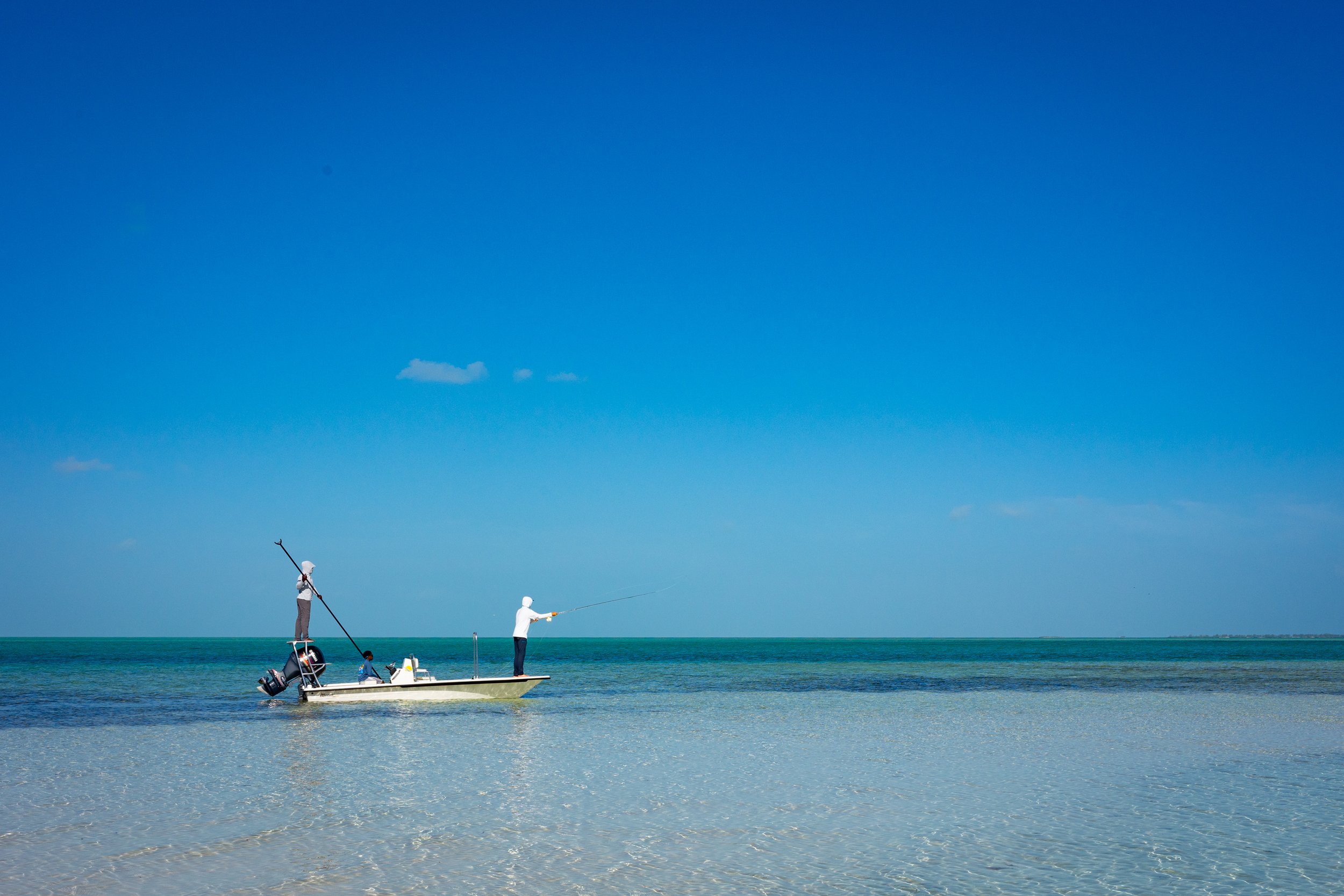
Ready Position: On the Skiff
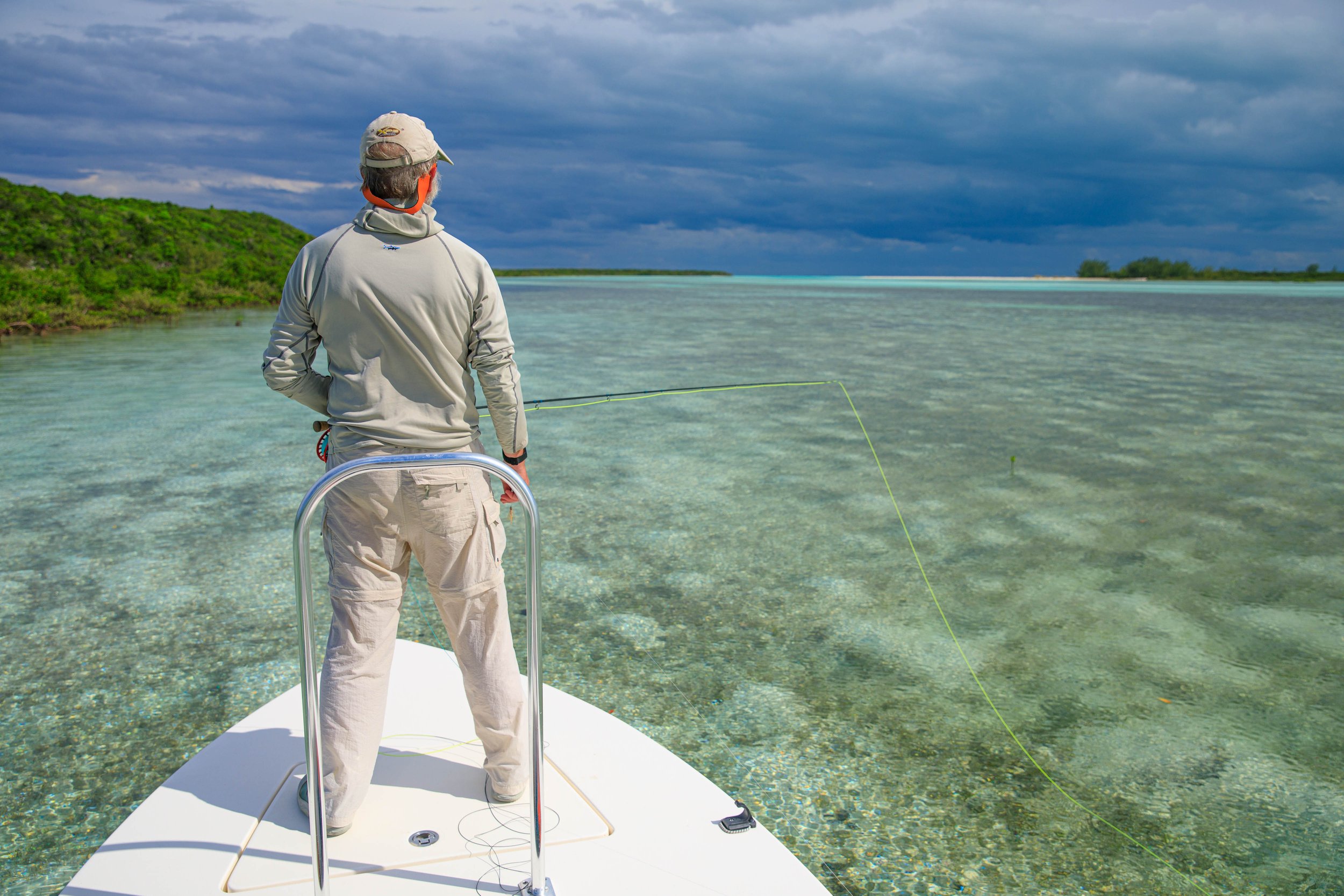
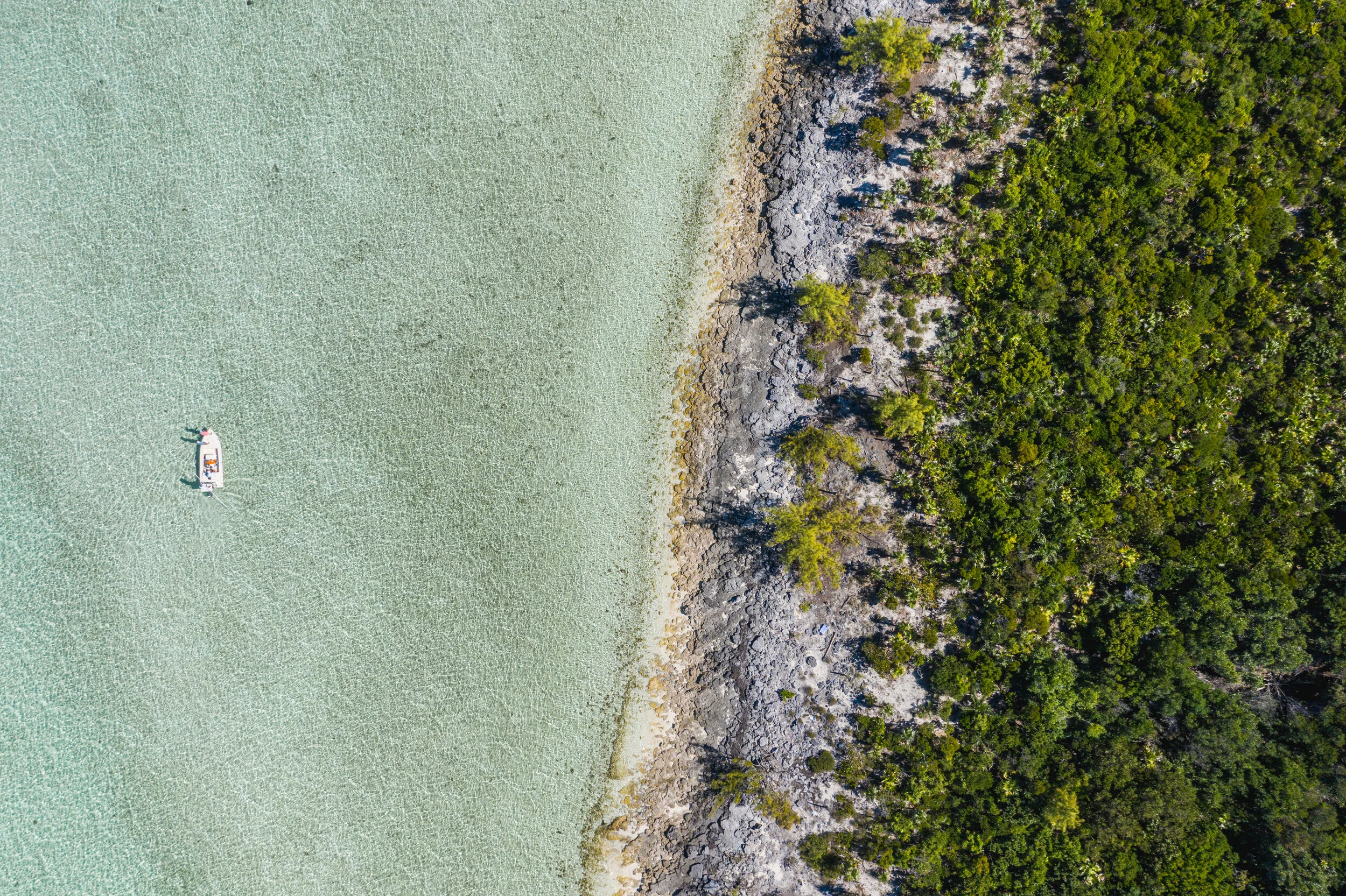
When it’s your turn to take the bow and look for fish, you should be mentally prepared to enter the game. Take a last sip of water, remove or add a layer if needed, and grab the rod. Be delicate as you step onto the casting deck and platform; step gingerly, make as little noise as possible, and try not to rock the boat as you make your way. Get your footing and balance before tending to the fly and fly line.
Once you’re stable on the casting platform, it’s time to prepare your fly line. Start pulling line off your fly reel, ensuring that you’re not pulling the line across the frame of the reel; instead, pull the line off parallel to the fly rod itself. If you like, reduce the drag so that you’re not pulling against it. If you do change the drag setting, be sure to dial it back to a setting appropriate to the fish you intend to fight!
Pull off an amount of line that you can cast comfortably, consistently, and confidently. While you’re doing this, give the line a firm stretch as it comes off the reel—especially if it’s your first day of your trip; this will remove any memory in the fly line. Take a practice cast (or several) if you’re not sure what the right length of line is–just tell your guide that you’re doing so. As you strip the line back in, be careful that it falls into the tidy cockpit of the skiff, and is in a place that won’t get caught or snagged on something (like a pack, footwear, water bottle, etc.). These practice casts provide two key benefits: first, they ensure that you have the right amount of fly line off the reel (enough line for a shot you are comfortable making, but not too much); and second, by casting the line that you’ve just pulled off the reel, you’ll then be stacking the line in the proper way (that is, with the line that will be casted first on top of the line that’ll be casted last, as opposed to the other way around).
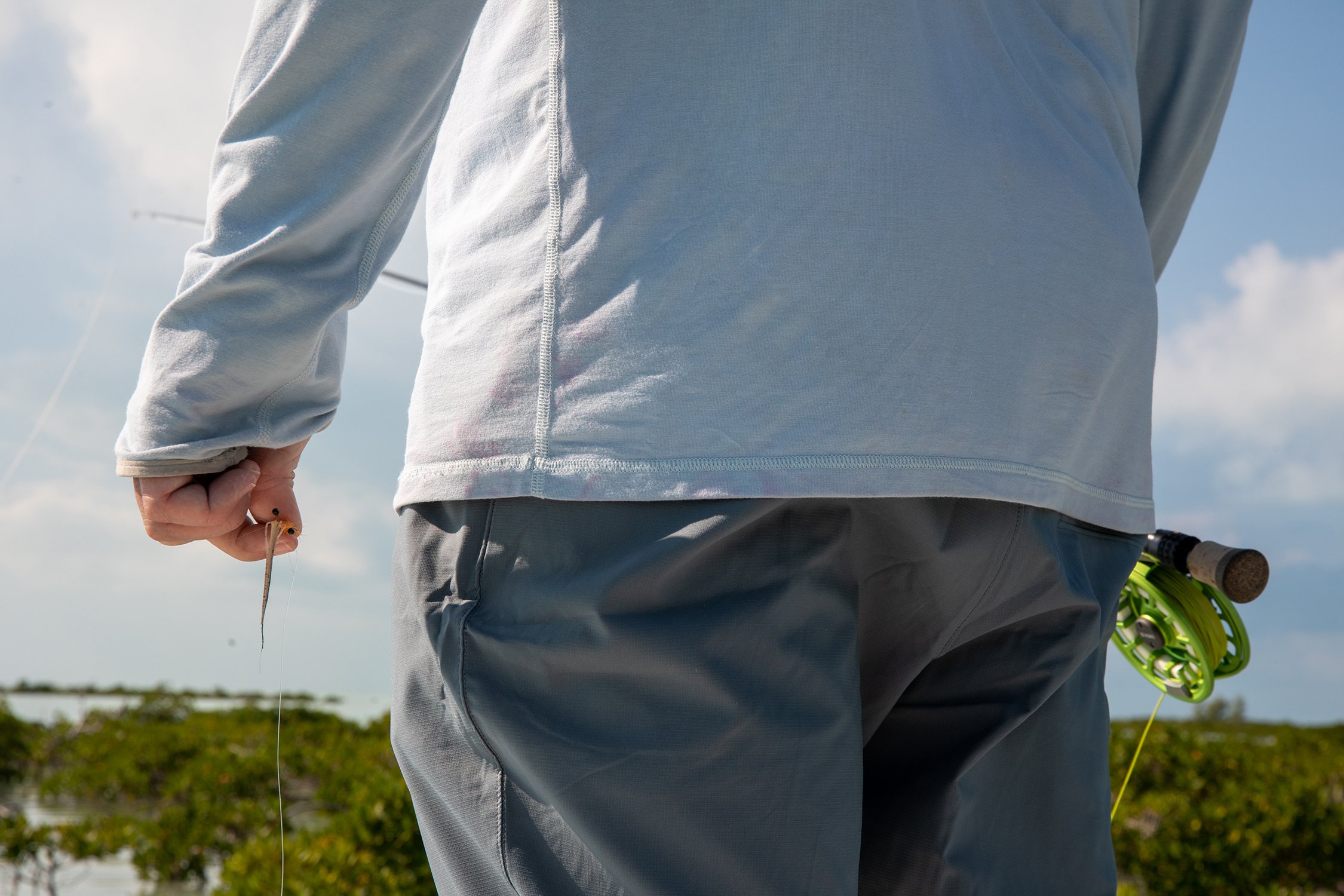
Strip in the fly line such that about a rod’s length of line remains outside the rod tip. Then, with your rod hand, pinch the fly line against the cork, and with your line hand, grab the leader just above the fly. Holding the rod, fly line, and leader in this way, flip it all to one side of the skiff or the other; this ensures that the line and leader don’t get caught under the boat as it’s poled by the guide.
You’re now in the ready position, primed to spot fish, point your rod when your guide gives directions (i.e., “11 o’clock, 50 feet”), and make that exceptionally beautiful cast. Try to relax as you hold your rod, line, and leader in this position; there’s no need to white-knuckle it all.

Ready Position: On Foot
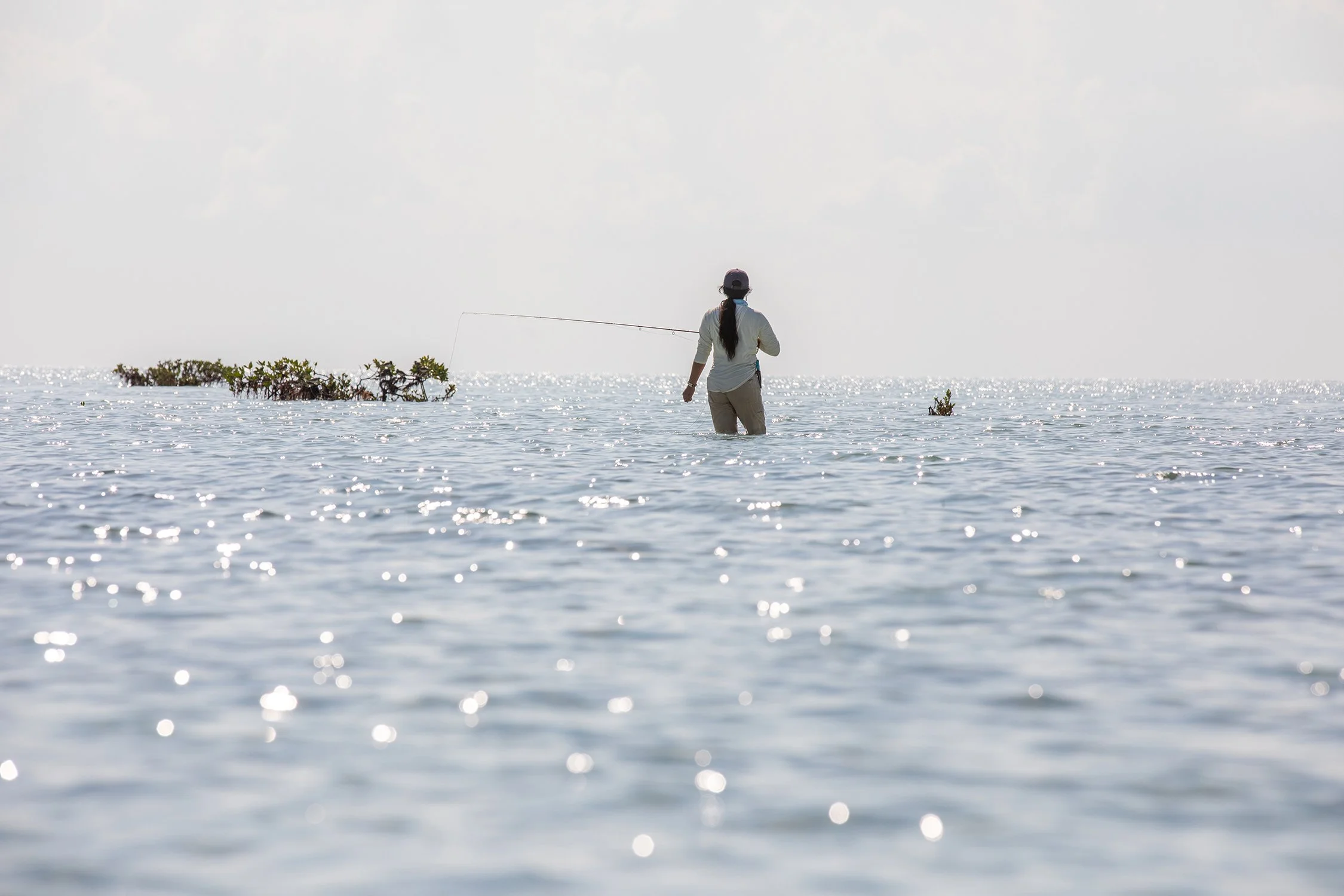
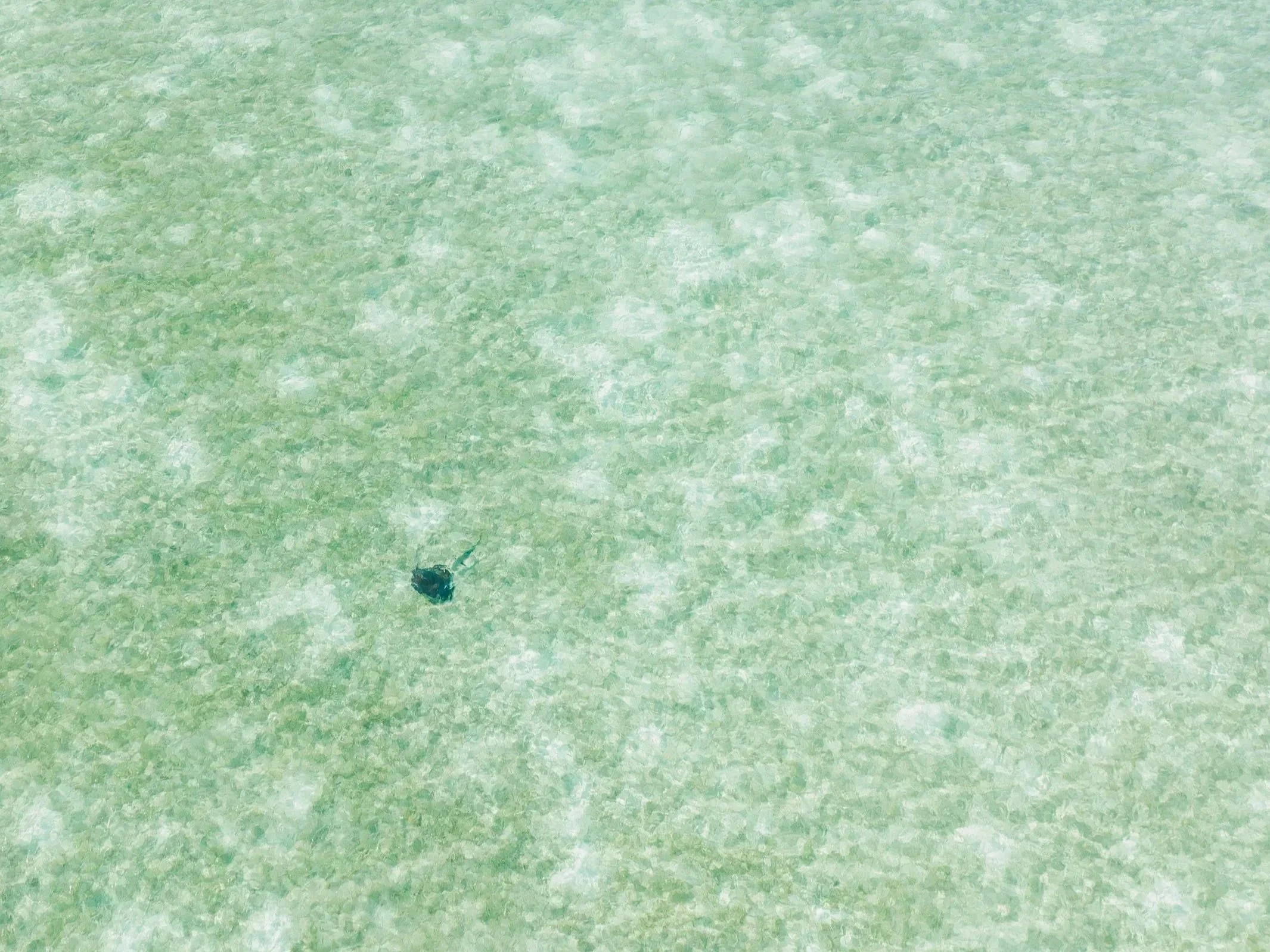
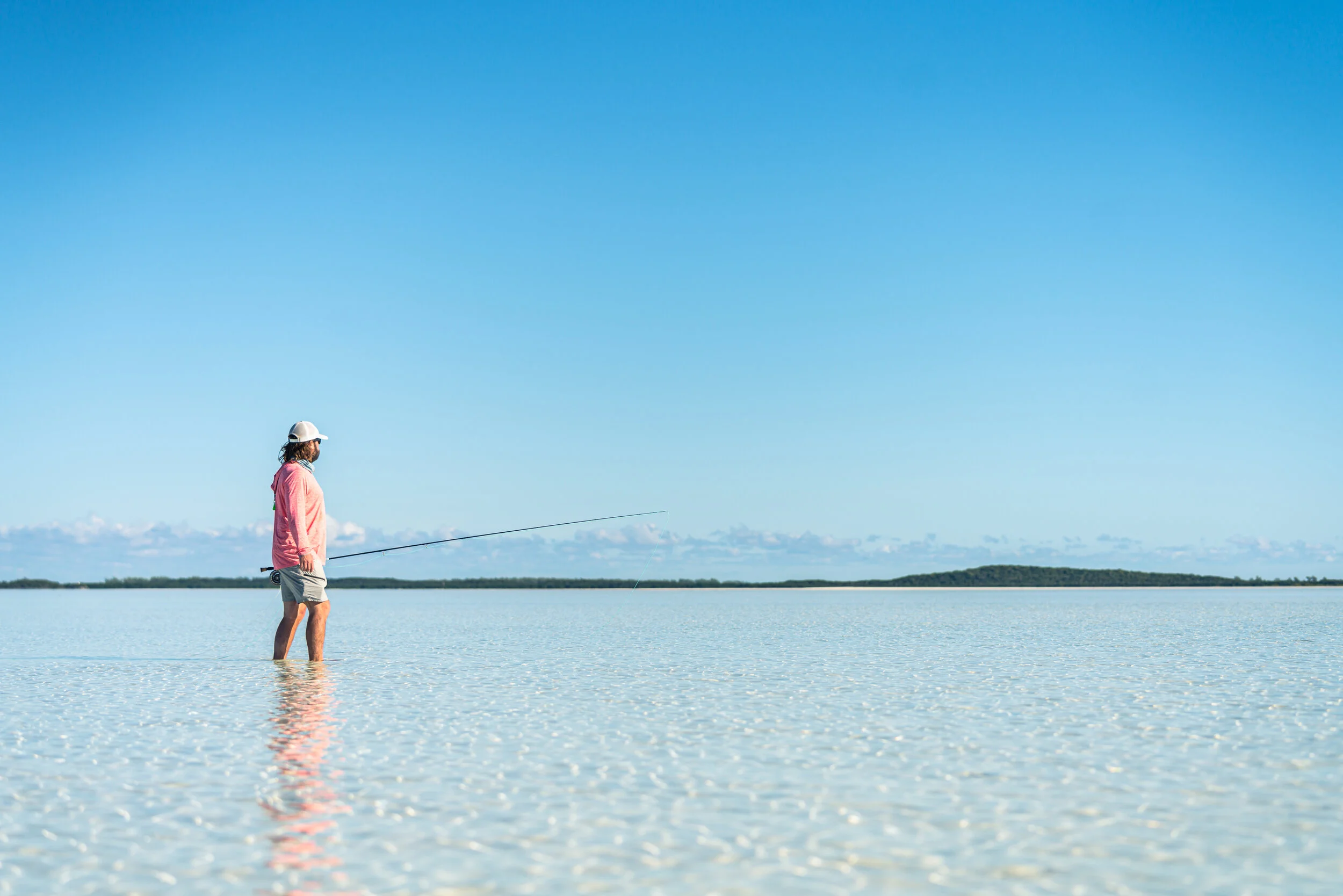
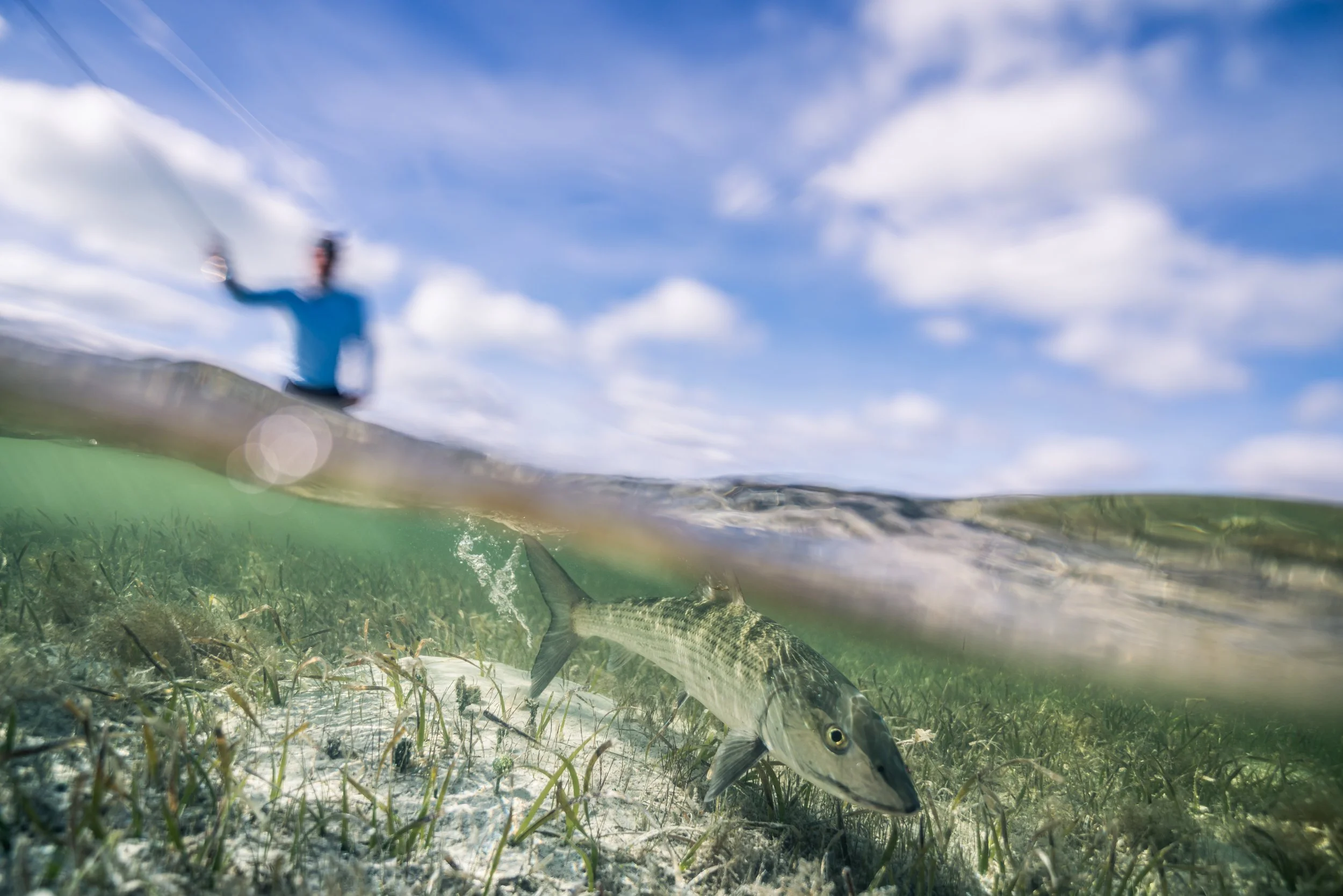
When tides align, Soul Fly anglers spend part of their fishing days on foot, in search of bonefish in skinny water of calf-deep and less. Additionally, it’s not uncommon to chase permit on foot by following feeding stingrays or stalking tailing fish in waist-deep or shallower water. Sightfishing on foot places the angler at the same level as the fish, which makes for extremely engaging and challenging fishing scenarios–our favorite! And, just like in fishing from the skiff, there are a handful of best practices to take care of before making a shot (cast) at the fish.
To fish on foot, you have to get out of the boat, of course. But before even swinging your legs over the gunwale, make sure that you have a few items: some extra flies, a spool of tippet, nippers, and pliers or forceps. All of these items easily fit into pants or shorts pockets, on a lanyard and a belt, but if you’re taking a small fishing pack, then a water bottle is another nice addition. Wading booties or sandals, if you want them, should be on and secure. This all seems obvious, but making a mental checklist and checking it will help ensure that you have everything we need when away from the skiff.
Getting out of the boat is just like stepping up to the casting platform in that it should be done as quietly and with as little disturbance to the water as possible. Ease into the water, and find your footing. If it aids in maintaining stealth, you can have your guide or fishing partner hand you a rod after you’re in the water and settled.
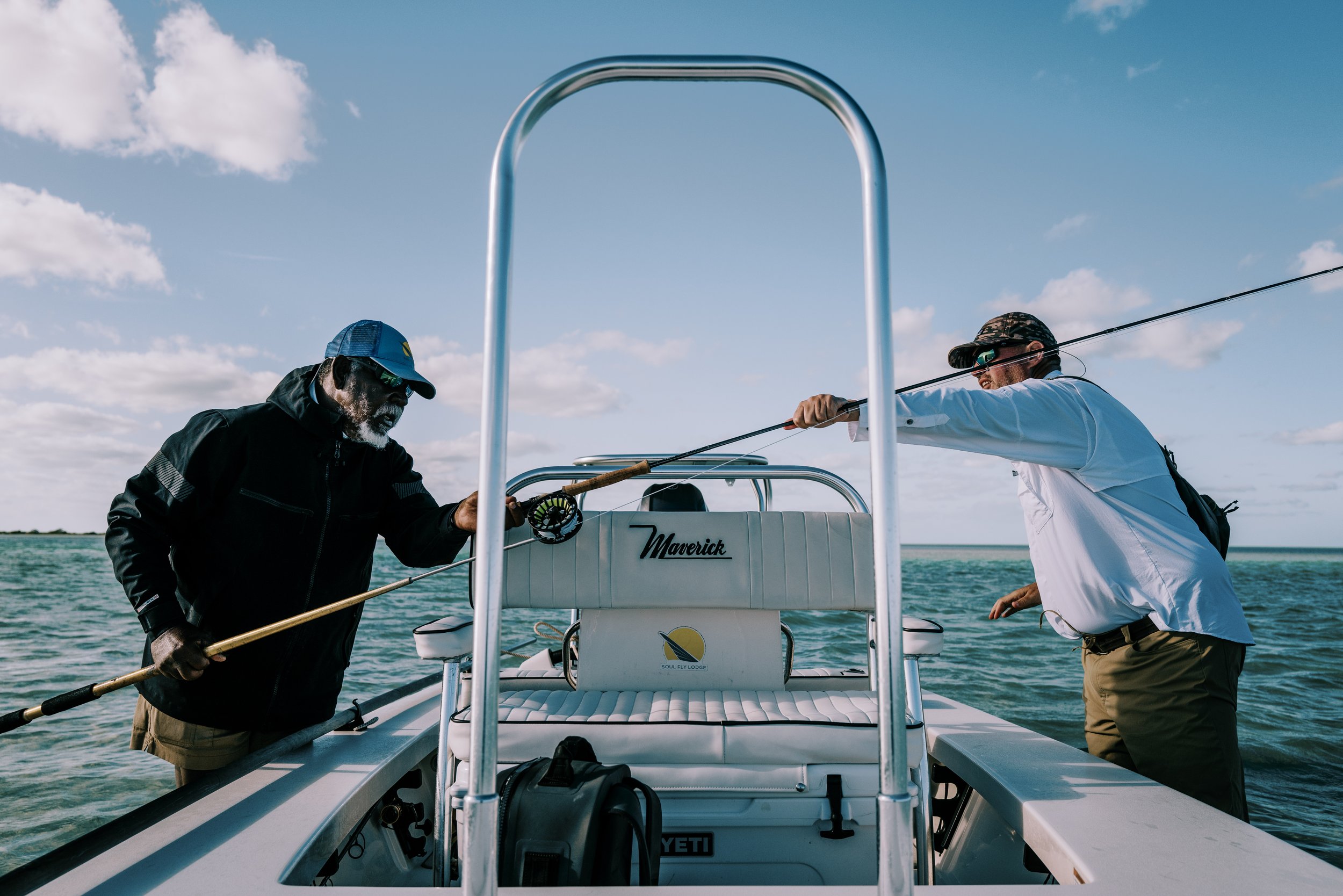
Once in the water and a short distance away from the boat, it’s time to prepare to make a shot. Strip fly line off the reel (again, ensuring that the line isn’t being pulled across the reel frame) until you have enough to make an extremely comfortable and confident shot. Bear in mind that when fishing on foot, you’re able to get closer to the fish than when in the boat, so you don’t need to pull out as much line as you would otherwise but if you choose this path, be aware, that a shorter cast will require more stealth. When bonefishing on foot, you’re typically able to position yourself such that fish are coming at you, or get within 50 feet or less; start with a short line and remember, you can always add more. Conversely, if you’re chasing a permit on a ray or a tailing permit, the appropriate length of line will be dictated by the fish’s behavior, so it’s wise to have more than enough line off the reel.
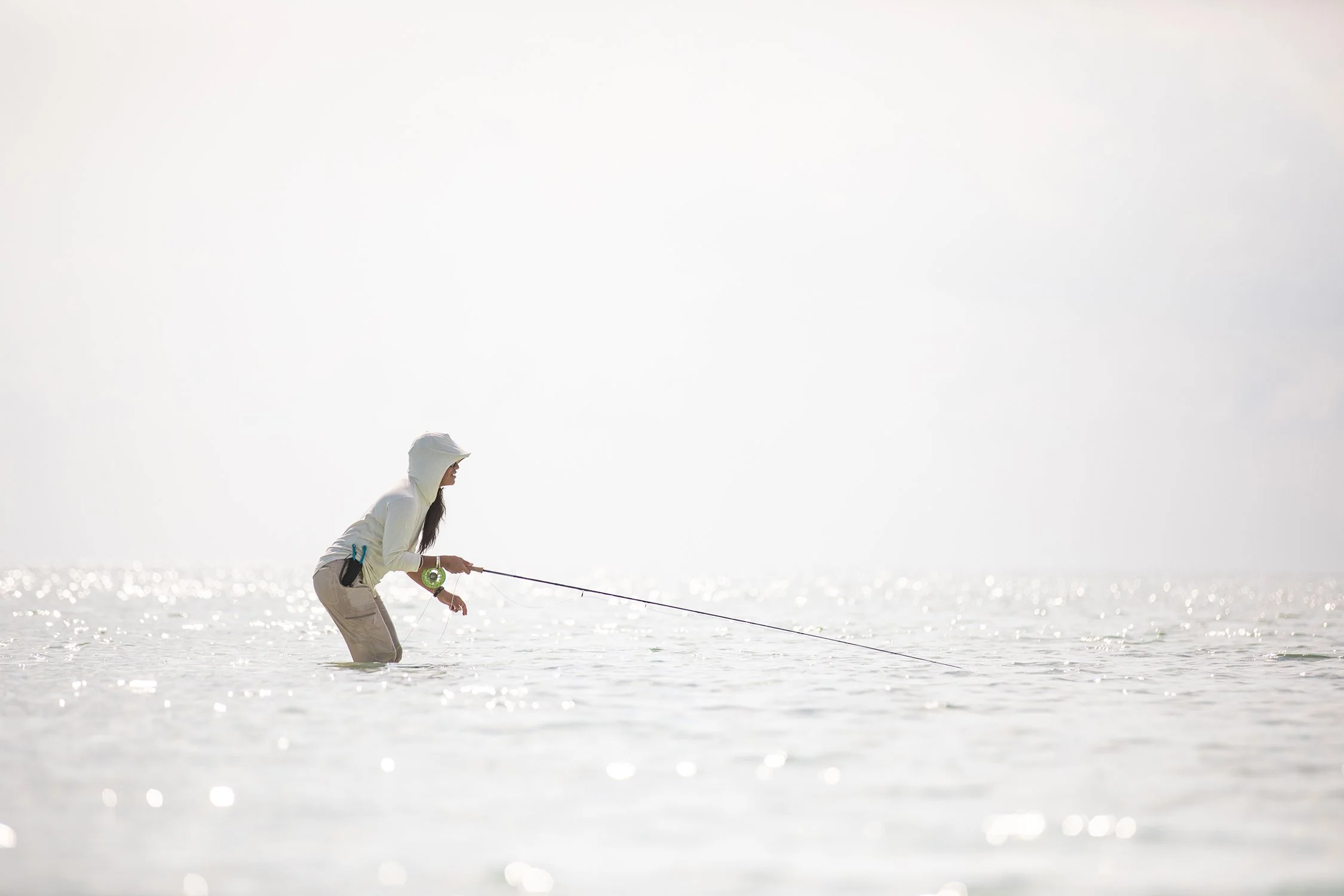
As you strip line off the reel, let it fall onto the water, and do your best to ensure that it doesn’t get caught on your feet, fishing pack, a mangrove shoot, or anything else. As you wade, the line will lay behind you, and you’ll want to check on it frequently to make sure that it remains tangle-free. If your line comes off the reel in twists or coils, take the time to remove the twist, or stretch the line to remove any memory; ask your guide for help here, if need be. Once you have an appropriate amount of line out, grab your leader just above the fly with your line hand, keep a finger of your rod hand on the fly line, and begin wading.
While moving towards an area or in pursuit of fish, keep in mind that the bottom is dynamic and the fly line behind you needs near-constant attention. Likewise, tidal currents may move the line in various directions; in addition to looking for fish, you’ll have to be aware of where your fly line is as well. When stationary, give frequent glances at your fly line to make sure that it’s not getting tangled at your feet or on anything else.

When it’s time to take a shot at a fish you’ve spotted, there will be some resistance as the fly line breaks the tension with the water surface. This is natural, requires a slight learning curve and, at first, may necessitate an extra false cast before delivering the fly–be aware of this dynamic. In instances where you spot a fish at distance and it’s clear that you won’t need to move to make the shot (i.e., the fish is swimming at you), this effect can be combatted by stacking the fly line at your feet before making the shot. That’s to say, as the fish approaches, strip in all the fly line that’s behind you–beginning with the line coming directly off the reel–and placing it on the water beside you. In doing so, be careful that the line is stacked correctly: the fly line coming out of the rod guides is on top of the line that’s coming out of the reel.
From there, do your best to remain calm while we wait until the fish are in range.
Successful sightfishing surely requires skilled fly casting–timely and accurate–and there’s no way around that. But getting into ready positions to make skilled fly casts is equally as important, and the anglers that remain vigilant and consistent in their approaches before casting simply have more success. It’s not overly complicated, and being aware is often enough, but paying attention to ourselves and our fly line before taking shots at bonefish and permit will undoubtedly increase our odds.


.jpg)